
Skip to content
01Guide · Schedule of Works
01 / 04
Guides · Contracts

Schedule of works: what it is, and why you need one.

A schedule of works is the line-by-line list of every task in a build, priced item by item. It is what a dispute gets measured against. Here is what goes in one, what happens without one, and how it differs from a bill of quantities.

↳ 02 The guide
02Article · The Long Read
02 / 04

The brief

Last reviewed · 13 August 2026

If a project does not have a Schedule of Works, the project does not exist. It exists in someone's head, usually the builder's, and that is where the variations start. Here is what should be in yours.

LineEvery task itemised
PricedAgainst each line
SignedBoth parties before work starts
VariationsDocumented + agreed in writing
CHAPTER01

What is a schedule of works?

In simple terms, a schedule of works is a list of the work required to complete a project.

Together with the plans and specifications, it forms the basis of a contract between the employer and the contractor to deliver the project. On time and on budget.

It differs from a bill of quantities in that it is priced by item rather than by quantity. With a schedule of works, the contractor is responsible for getting the quantities correct, not the employer, so the liability passes to them.

Albeit with a proviso. The employer still needs to hone the specifics and reference them accordingly. The schedule should be clear and accurate, and the contractor should be able to determine easily what the job entails and what materials are needed. Any obscurity gives the contractor the opportunity to relinquish some of that liability.

Whether you're a homeowner or a property investor, it's a good idea to have a proper schedule of works for your project. That way your contractor knows exactly what they need to do.


Architect's drawings laid out on site during a refurbishment.
The drawings say what it looks like. The schedule says what gets done, line by line.
CHAPTER02

What goes in a schedule of works

There is no single legal format, which is why people search for a template and find twenty different ones. What matters is that each line is specific enough to price and specific enough to argue about later.

Work through the property in a logical order, usually room by room and then externals, and for each item state the location, the task, the material or specification, and who supplies it. A line reading 'kitchen: new sockets' is worth very little. A line reading 'kitchen: six double sockets, brushed steel, positions per drawing 04, contractor to supply' can be priced, checked and enforced.

Cover the sequence as well as the tasks: strip out, first fix, plaster, second fix, decoration, snagging. Say what is excluded as clearly as what is included, because exclusions are where most arguments start. And state how variations get agreed, in writing, before the work happens rather than after it.

On a HMO add the compliance items explicitly. Fire doors, intumescent strips and closers, emergency lighting, interlinked alarms. Those are the lines that get left out and then cost the most to put right, as the video below shows.

John pointing at a plain flush door in a refurbished HMO that has no intumescent strip or door closer fitted.
A fire door that is not one. No strips, no closer, and nothing in a schedule to say there should have been.
CHAPTER03

What happens when there is no schedule of works

The video is an example of what can happen when communication breaks down between the employer and the contractor, and the reason a schedule of works would have been good to refer back to.

The property is a 4-bed HMO that had been described as newly refurbished. The tenants were about to move in. John was asked to properly assess it beforehand.

John pointing at a crude mortar patch spread across brickwork beside a doorway.
There can be no excuses for this attempt at a repair. But was it ever specified?
CHAPTER04

Key moments from the video

4:01 · Fire doors should be fitted with intumescent strips, which expand when exposed to heat, preventing the spread of fire and smoke. These doors don't have them. Nor do they have door closers.

5:04 · When a chimney is removed, a steel and padstones are needed to support the remaining brickwork. No steel has been installed here. A contractor should know to install one. Were they instructed to?

7:24 · Fire safety is a huge part of any building design, in particular HMO design, where unrelated people live together. So when emergency lighting is fitted, it needs to work properly.

8:30 · It's best practice to fit a fire door where there is a high risk of fire, like a kitchen. But there's no fire door here.

11:31 · If you're going to repair something, do it properly. This poorly applied sealant is actually adding to the existing problem.

12:24 · There can be no excuses for this awful attempt at a repair. But did the employer give sufficient instruction in the schedule?

13:47 · This rotten fascia board is allowing the potential access of creatures and rain. But was a new fascia board part of the schedule of works?

14:33 · Pooling on a flat roof is a classic sign that it is holding too much water. Here, the poor repair jobs are causing internal damp problems.

16:47 · Good design and planning are essential. There should be no need for extension leads if careful thought is given to the design.

John pointing up at a rotten timber fascia board above painted brickwork.
A rotten fascia. Not a hard fix, and not on anybody’s list.
CHAPTER05

What if you don't have a schedule of works?

As John describes in the video, a schedule of works isn't a mandatory requirement. It is, however, very advisable.

Ultimately the problems identified in this HMO need to be put right before tenants can move in. But without the relevant paperwork in place, responsibility becomes a grey area. Without a schedule of works there is no reference point. The employer can claim the works were asked for. The contractor can claim otherwise.

You could argue that a good, honest contractor should alert the employer to any issues regardless of whether they appear in a schedule, because they are in the best position to know what work is needed. As in the video, where a steel should have been inserted when the chimney was removed. It shouldn't come down to cost, or an item on a list. It should absolutely be about the safety of the tenants.

But in the absence of a formal written contract there is scope for uncertainty and supposition. A schedule of works helps eliminate the ambiguity.

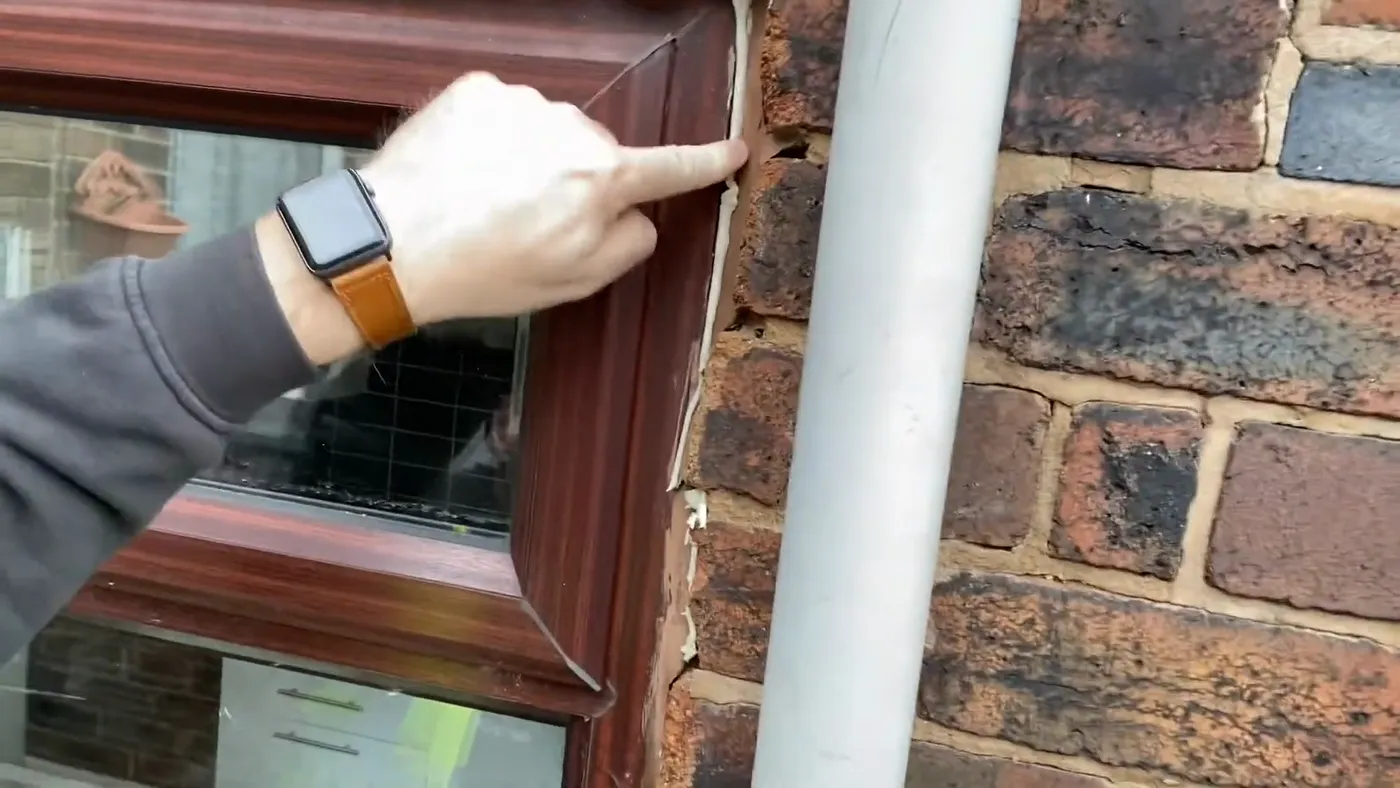
A thick, badly applied bead of sealant smeared where a downpipe meets a window reveal and brickwork.
Sealant used as an answer to a problem it cannot fix. This is what unspecified work looks like.

If you are buying a property to refurbish, get the schedule written before you agree a price. It is the difference between a quote you can compare and a quote you can only hope about.

CHAPTER06

Schedule of works or bill of quantities?

A bill of quantities, sometimes referred to as a BoQ or BQ, gives measured quantities of the items identified by the plans and specifications. As the name suggests, it is usually produced by a quantity surveyor.

In layman's terms a bill of quantities is like an itemised bill. A schedule of works, in contrast, provides totals for the various stages of the project, rip-out, decoration and so on, and then a final total.

There are two types of bill of quantities.

A firm bill of quantities. The work required is measured and described precisely, so it can be priced much more accurately, and consequently those prices are more reliable.

An approximate bill of quantities. Less accurate, as the name reflects. It is usually used where there is insufficient information to prepare a firm bill at the time of pricing, and the quantities are subject to re-measurement on completion.

CHAPTER07

Comparing quotes

A clear and accurate schedule of works, together with the supporting plans and specifications, should form the basis of a solid and fair contract. It is also a means of passing liability for quantifying the project to the contractor.

Which can be a good thing and a bad thing. Good in the sense that it mitigates risk for an employer who is unsure of the correct amount of materials needed. Bad in the sense that quotes from different contractors can vary enormously, because they are not itemised.

Unless the employer states the exact item they require, it is open to interpretation. One contractor might price for a cheap version of an item. Another might price for a more expensive version of the same item. In which case you may decide a bill of quantities suits you better.

Either way, when it comes to obtaining quotes from different contractors, make sure you're comparing apples with apples.

Landlord, agent or surveyor?

Send us your schedule of works to price.

Commercial units, rental property and homes. Priced from your schedule or drawings, with anything that changes agreed before it happens.

↳ 03 On camera
03Guide · On Camera
03 / 04

On camera

Watch it on a real job.

John walks a 4-bed HMO that had been signed off as newly refurbished, days before tenants were due to move in. Every photograph on this page is a frame from this film.

↳ 04 Start your build
12Tell me about your build · Resonance
12 / 12

For the right build only

Build it right.
Build it HYPE.

We take on substantial building work across Stoke-on-Trent and the Midlands: extensions, conversions, full refurbishments, commercial works and repairs after fire, flood or damage. Properly scoped projects, not odd jobs or reactive maintenance.

We're VAT registered, so on smaller jobs a non-VAT builder will always undercut us. That's just the maths. Our work pays off where doing it properly matters more than the cheapest quote.

If that sounds like your project, tell us what you've got. We'll tell you straight whether we're right for it, and if we're not, we'll say so. Either way, we wish you all the best x.

↳ Speak to the team+44 1782 930 043Mon–Fri · 9am–5pm · Sat–Sun · Closed
End of drawing set