
Skip to content
01Guide · Chimney Removal
01 / 04
Guides · Structural

Using gallows brackets to safely remove a chimney breast.

Gallows brackets are the chimney brackets that carry the load when the chimney breast comes out but the stack above stays. How they work, when a steel is the right call instead, and why the party wall decides it.

↳ 02 The guide
02Article · The Long Read
02 / 04

The brief

Last reviewed · 20 August 2026

Removing a chimney breast is one of the most common, and most often botched, building jobs in UK homes. The mistake people make is removing the chimney breast on the ground floor without properly supporting the breast and stack above. Gallows brackets are one of three engineered solutions that prevent the upper part of the chimney from collapsing.

StructuralAlways commission an engineer
2Brackets per breast
SteelBracket material
SE-designedSigned off to current codes
CHAPTER01

Chimney removal using gallows brackets

One way to safely remove a chimney breast from a property is by using gallows brackets.

Load bearing gallows brackets are ideal for supporting a chimney stack in the loft. For example, when you're removing the chimney breast from the ground floor and first floor.

Chimney breast removal is something we have to do on a regular basis here at HYPE Building. Particularly in HMO conversions where floor space is crucial.

The whole job is in the video further down this page, and every photograph here is a frame from it.
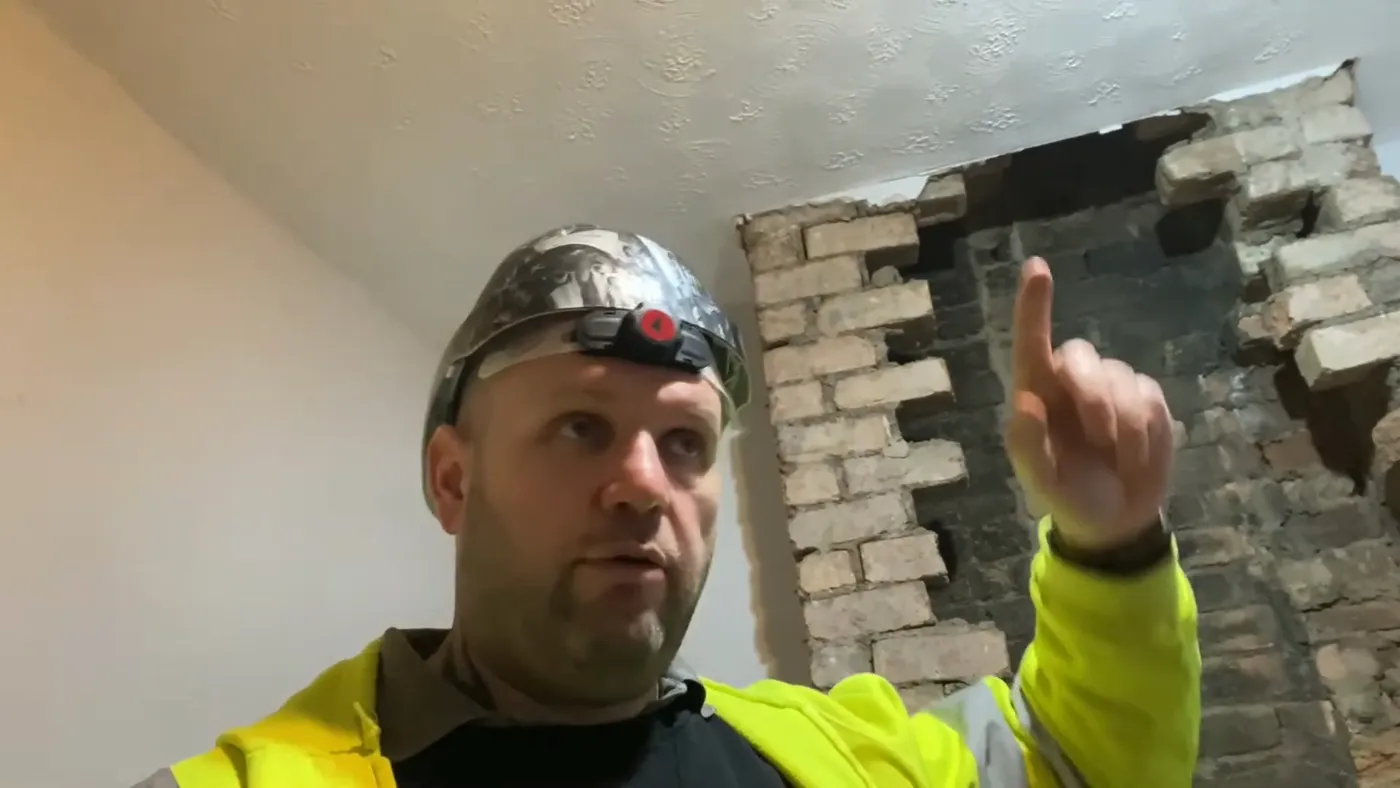
John pointing up into the recess where a chimney breast has been taken out, with the brickwork of the stack above exposed.
Breast out, stack above still there. That load is the entire question.
CHAPTER02

What is a gallows bracket and how does it work?

A gallows bracket is a right-angled triangular bracket, rather like a shelf bracket.

Two gallows brackets and a metal plate support the chimney stack. A bracket sits either side of the stack with the top of each bracket being the exact depth of the stack.

A metal plate bridges the two brackets and sits directly beneath the bricks it is supporting.

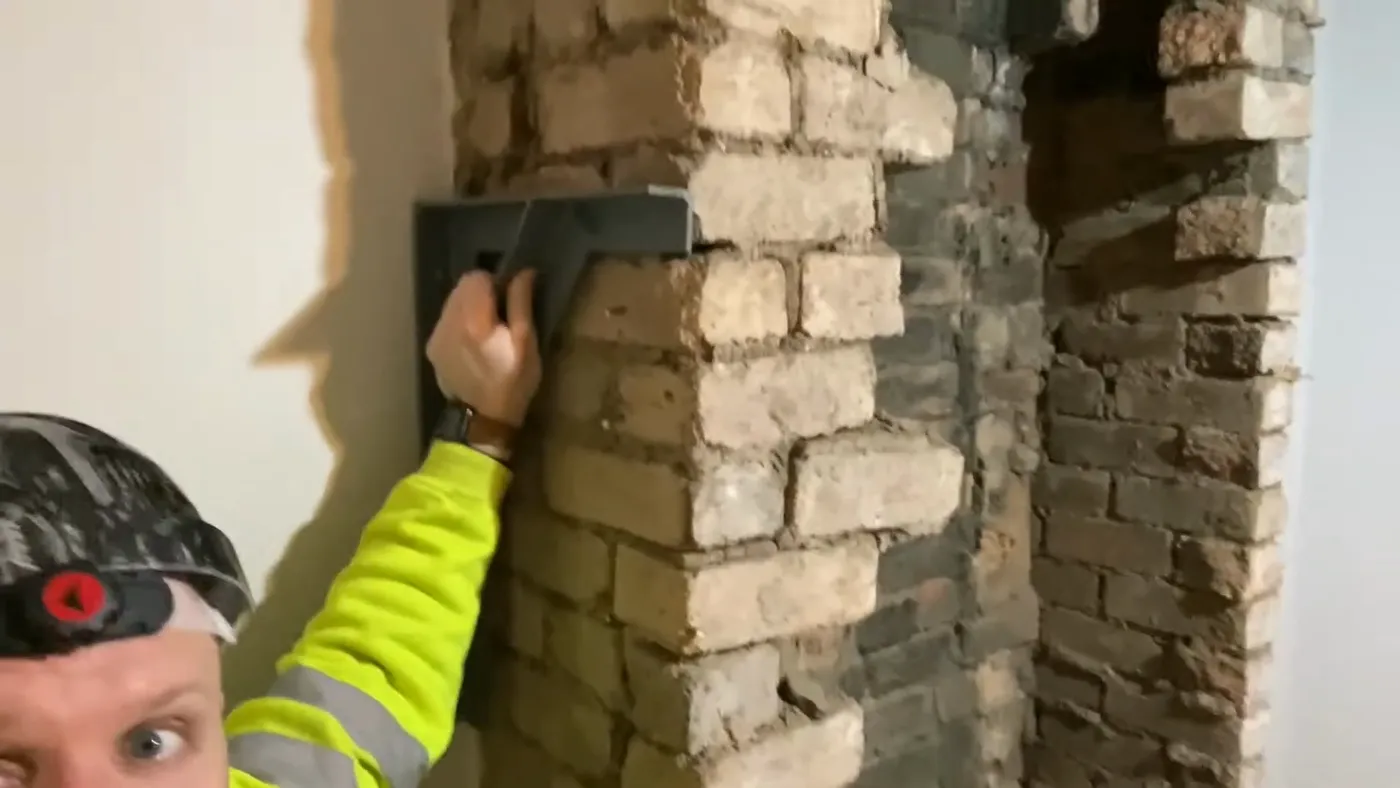
A steel gallows bracket held flat against the brickwork of a chimney stack to show its depth.
The bracket held against the stack. Its depth matches the stack depth exactly, which is the point of designing rather than buying one.
CHAPTER03

Removing a chimney breast downstairs only

This is the most common version of the question, and it is the one where the answer changes.

If the breast comes out on the ground floor only, everything above it stays: the first floor breast, the stack in the loft, and the chimney above the roof. That is a lot of masonry, and it is considerably more weight than gallows brackets are intended to carry. A steel beam is normally the right call.

Gallows brackets come into their own on the job in the video, where the breast has been taken out on both floors and the only thing left needing support is the stack in the loft.

So the honest answer to whether you can remove a chimney breast downstairs only is yes, but not usually on brackets. What decides it is how much is left above, and that is a calculation rather than an opinion.

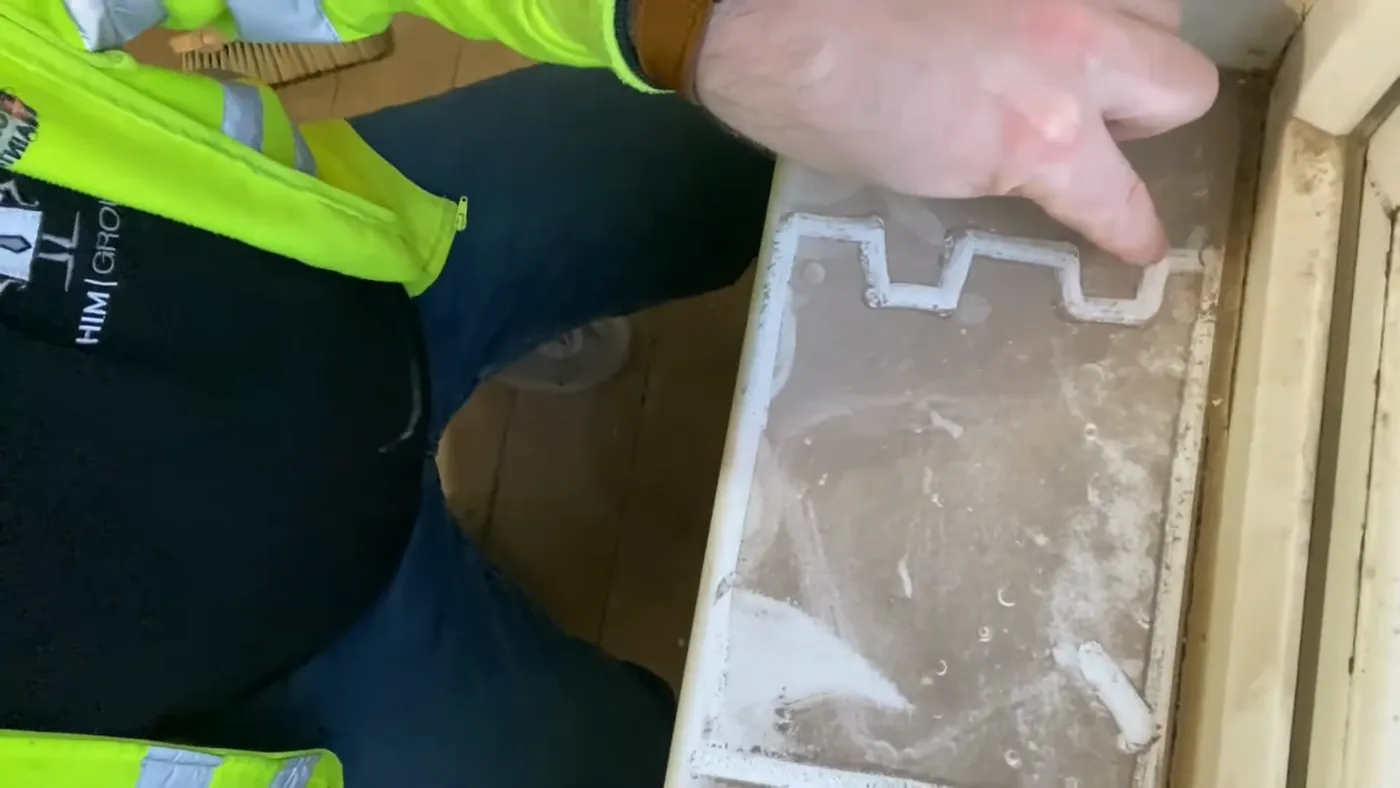
A steel support plate with a stepped, castellated profile, held up on site.
The plate that bridges the two brackets and takes the stack. Made to a drawing, not off a shelf.
CHAPTER04

Key moments from the video

0:23 · Before removing a chimney using gallows brackets, a structural engineer will need to assess the weight of the load that the brackets will support.

2:41 · The gallows bracket itself looks like a shelf bracket. Its depth is identical to the depth of the chimney you're removing.

3:54 · A structural engineer will design the gallows brackets. This ensures they are the correct size and thickness to support the remaining chimney stack. Building Control will then need to sign off the work. They will ask to see the drawings from the structural engineer. Thus, giving the reassurance that the work is correct and safe.

5:03 · You'll need a Party Wall Notice. Because it's essential to inform your neighbour that you're removing your chimney breast.

5:58 · John describes how removing the chimney breast impacts on the structural integrity of the party wall.

7:11 · It's important to fill any gaps in the mortar to prevent the potential release of harmful gases from next door.

I was in the process of purchasing an investment property. There were several structural issues with the property including wall tie failure. I required an experienced person to advise on the best solution to move forward. John was able to advise not only from a structural/building point of view but also from an investment perspective.

CHAPTER05

Gallows brackets or steel?

At this particular property, a HMO conversion, we used gallows brackets.

That's because the chimney breast has been removed on both floors of the property. And only the remaining chimney stack in the loft requires support.

If the chimney breast is being removed on the downstairs floor only, a steel would be a better option. Because the remaining weight requiring support is much greater.

So, in a nutshell, gallows brackets are suitable when a smaller weight is being supported.

However, there is a caveat.

CHAPTER06

The party wall is what actually decides it

As John explains in the video, a lot depends on whether your neighbour has already removed their chimney.

If they have, making any structural alterations your side may place the party wall under too much strain. Two breasts removed from opposite faces of the same wall is a very different structure from one.

Hence the reason you need the opinion of a structural engineer. They will tell you the correct approach to take.

You will also need a Party Wall Notice, because it is essential to inform your neighbour that you are removing your chimney breast. And when the breast comes off, any gaps left in the mortar need filling, to prevent the potential release of harmful gases from next door into your rooms.

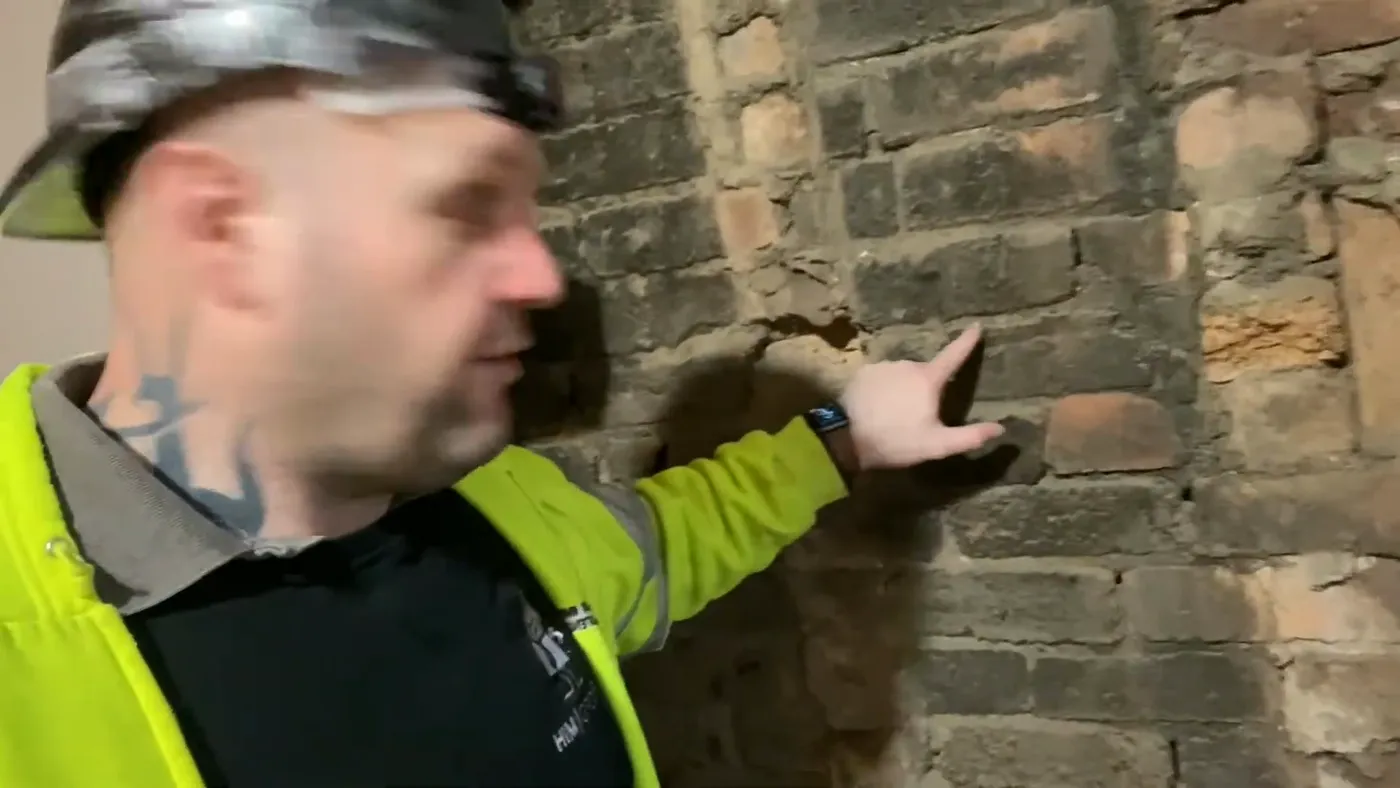
John pointing at open mortar joints in the party wall brickwork left behind after a chimney breast was removed.
Gaps like these get filled. On a party wall they are a route for whatever is next door.

Found this on a property you own or manage?

We do the work.

In Stoke-on-Trent, Staffordshire or Cheshire? We do this work on homes, rental property and commercial premises: priced properly, run by one project manager, and logged and photographed on The HYPE System.

↳ 03 On camera
03Guide · On Camera
03 / 04

On camera

Watch it on a real job.

John walks a HMO conversion where the chimney breast came out on both floors, and shows the brackets, the plate and the party wall problem that decides whether you can do it at all. Every photograph on this page is a frame from this film.

↳ 04 Start your build
12Tell me about your build · Resonance
12 / 12

For the right build only

Build it right.
Build it HYPE.

We take on substantial building work across Stoke-on-Trent and the Midlands: extensions, conversions, full refurbishments, commercial works and repairs after fire, flood or damage. Properly scoped projects, not odd jobs or reactive maintenance.

We're VAT registered, so on smaller jobs a non-VAT builder will always undercut us. That's just the maths. Our work pays off where doing it properly matters more than the cheapest quote.

If that sounds like your project, tell us what you've got. We'll tell you straight whether we're right for it, and if we're not, we'll say so. Either way, we wish you all the best x.

↳ Speak to the team+44 1782 930 043Mon–Fri · 9am–5pm · Sat–Sun · Closed
End of drawing set