
Skip to content
01Guide · Wall Tie Failure
01 / 04
Guides · Structural

Wall tie failure: how to spot it and fix it.

Wall tie failure is when the ties rust and expand, forcing the brickwork apart. Common in cavity walls built between 1920 and 1980. What a failed tie looks like, how to spot one from outside, and what fixing it involves.

↳ 02 The guide
02Article · The Long Read
02 / 04

The brief

Last reviewed · 13 August 2026

Most cavity-wall homes in the UK built before the mid-1980s have wall ties of a generation that were prone to corrosion. As ties corrode they expand, lifting the outer leaf of brickwork off the inner leaf, and producing the characteristic horizontal crack patterns. Diagnosis is easy. Fix is moderate. Ignoring it is expensive.

1920-80Affected build years
CavityWall construction needed
300mmCrack vertical spacing
10mmTie diameter typical
CHAPTER01

What is wall tie failure?

When a wall tie rusts and expands, the brickwork moves and the mortar no longer adheres to the brick. This results in the wall becoming unstable.

The photograph shows old style wall ties that have been badly corroded. This happens when rainwater seeps through gaps in the pointing, reaches the tie, and the rust that forms takes up more room than the steel it replaced. That expansion is what lifts the courses apart.
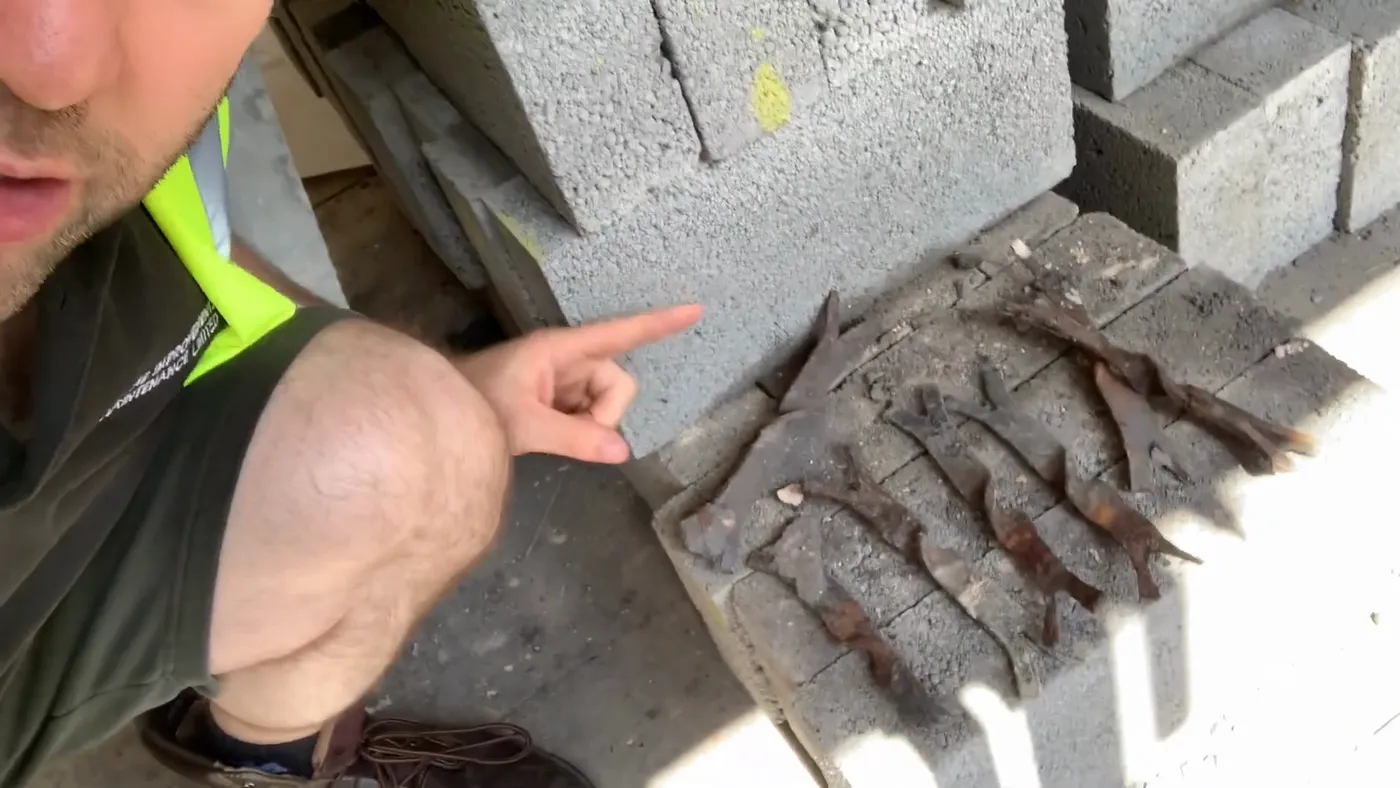
A row of old steel wall ties removed from a cavity wall, heavily rusted and flaking.
Ties taken out of the wall on the Fenton job. This is what rainwater through failed pointing does to them.
CHAPTER02

What are the consequences of wall tie failure?

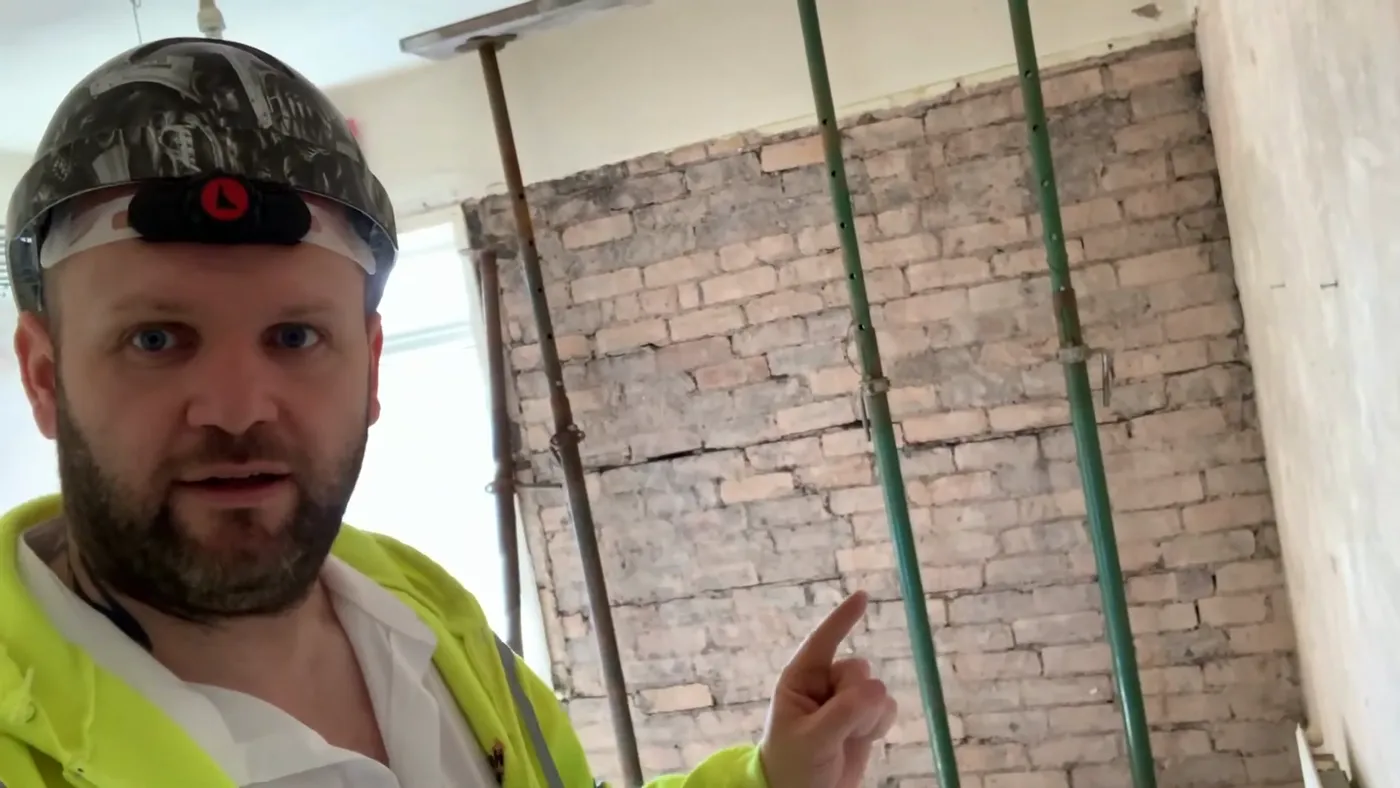
Corroded wall ties can devastate a property. In the most severe cases, as with this terraced house in Fenton, Stoke-on-Trent, part of the house is having to be rebuilt.

As John explains in the video, cracks in brickwork can sometimes be repaired using brick stitching. However, in this case, the wall was in such a poor state that it had to instead be rebuilt.

The rear wall of a terraced property partly taken down and propped with acrow props, exposing the floor levels inside.
The rear wall of the Fenton house, propped and part removed. This is the end of the road for a tie problem left long enough.
CHAPTER03

How to spot wall tie failure

In the first film of the pair, John explains how you can spot a wall where the brick ties have failed.

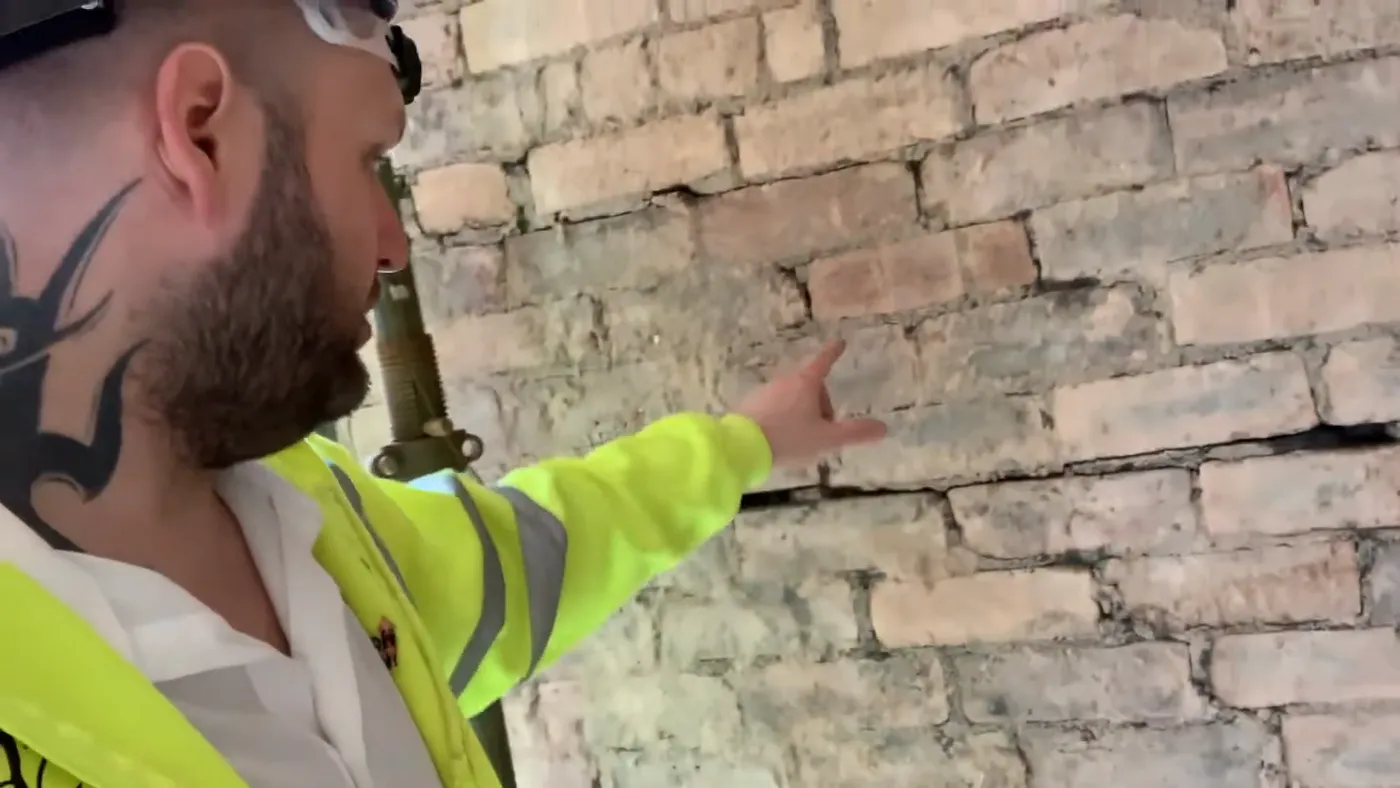
Look out for horizontal cracks in the mortar. They follow the bed joints, which is what makes them different from settlement cracks, and they tend to repeat at regular heights up the wall, because that is where the ties sit.

From outside, the other thing to look at is the line of the courses, particularly where your property meets next door. Where ties have expanded, the brickwork lifts, and the rows on one side stop matching the rows on the other.

John pointing at a long horizontal crack running along a mortar bed joint in an external brick wall.
A crack that runs along the bed joint rather than through the bricks. That horizontal line is the tell.
CHAPTER04

Key moments from the video

0:44 · John shows us the rear wall of the property, which has been partly removed because of the consequences of wall tie failure.

3:13 · When pointing perishes on the outer wall, rainwater seeps into the wall. Wall ties get wet, begin to rust and start to expand.

3:38 · The pointing on this particular property had perished to the point that it was possible to see daylight through the brickwork.

3:56 · Helifix brick stitching can be used for repairing structural failure in brickwork. But this wall was too badly damaged for this method.

4:28 · Modern wall ties (brick ties) are made from stainless steel and, therefore, far less susceptible to rust.

5:51 · The rear wall of the property is so badly damaged due to the corroded wall ties that the brickwork has started to bow under pressure.

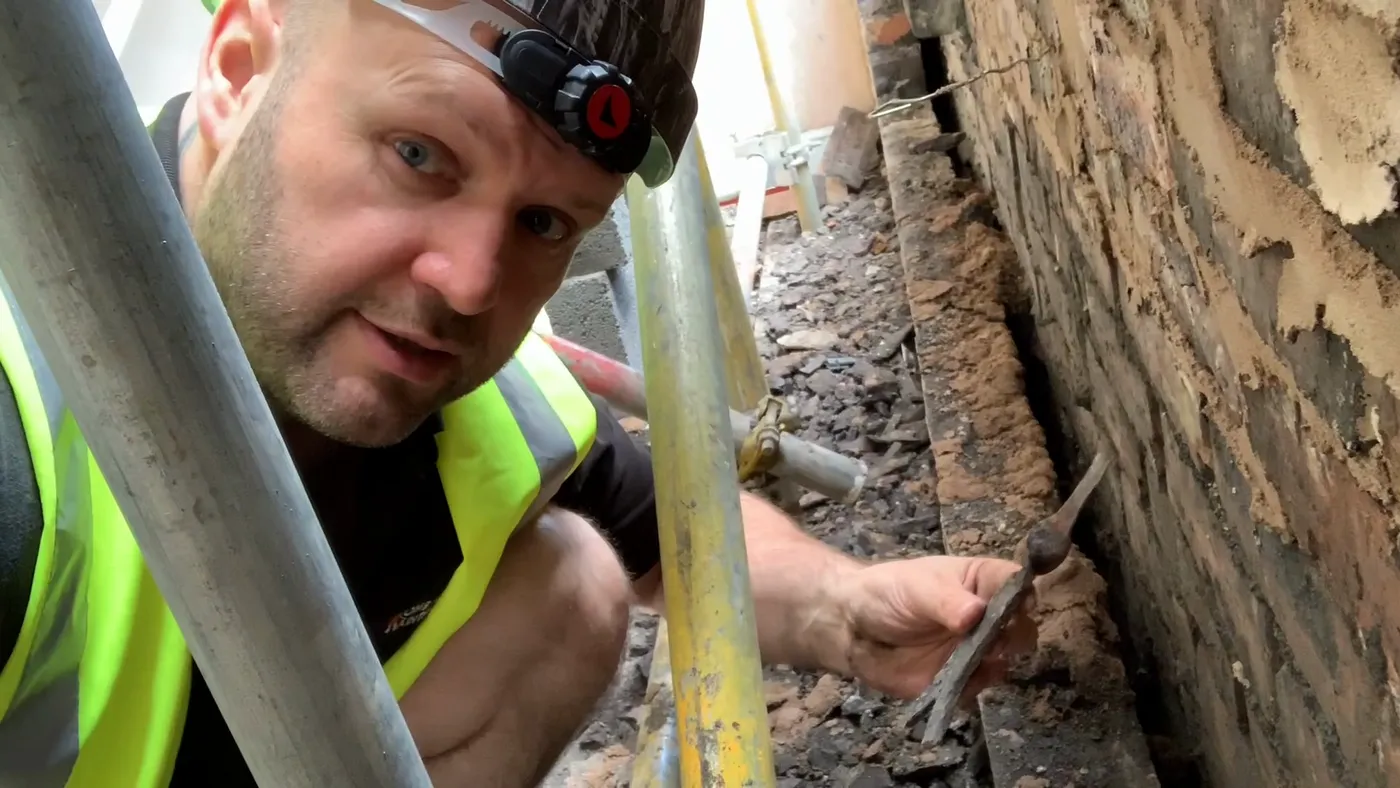
A corroded wall tie still bedded in the exposed cavity of a brick wall, surrounded by rusted debris.
A tie still in the cavity, mid-failure. The rust staining around it is the giveaway once the wall is open.

I was in the process of purchasing an investment property. There were several structural issues with the property including wall tie failure. I required an experienced person to advise on the best solution to move forward. John was able to advise not only from a structural/building point of view but also from an investment perspective.

CHAPTER05

Is it your wall or your neighbour’s?

On a terrace this question comes up immediately, and it matters because it changes who pays.

The ties are in your wall. Where the party wall is involved, or where the movement has carried across into the adjoining property, it stops being a job you can simply get on with and becomes a conversation with next door and, usually, a structural engineer.

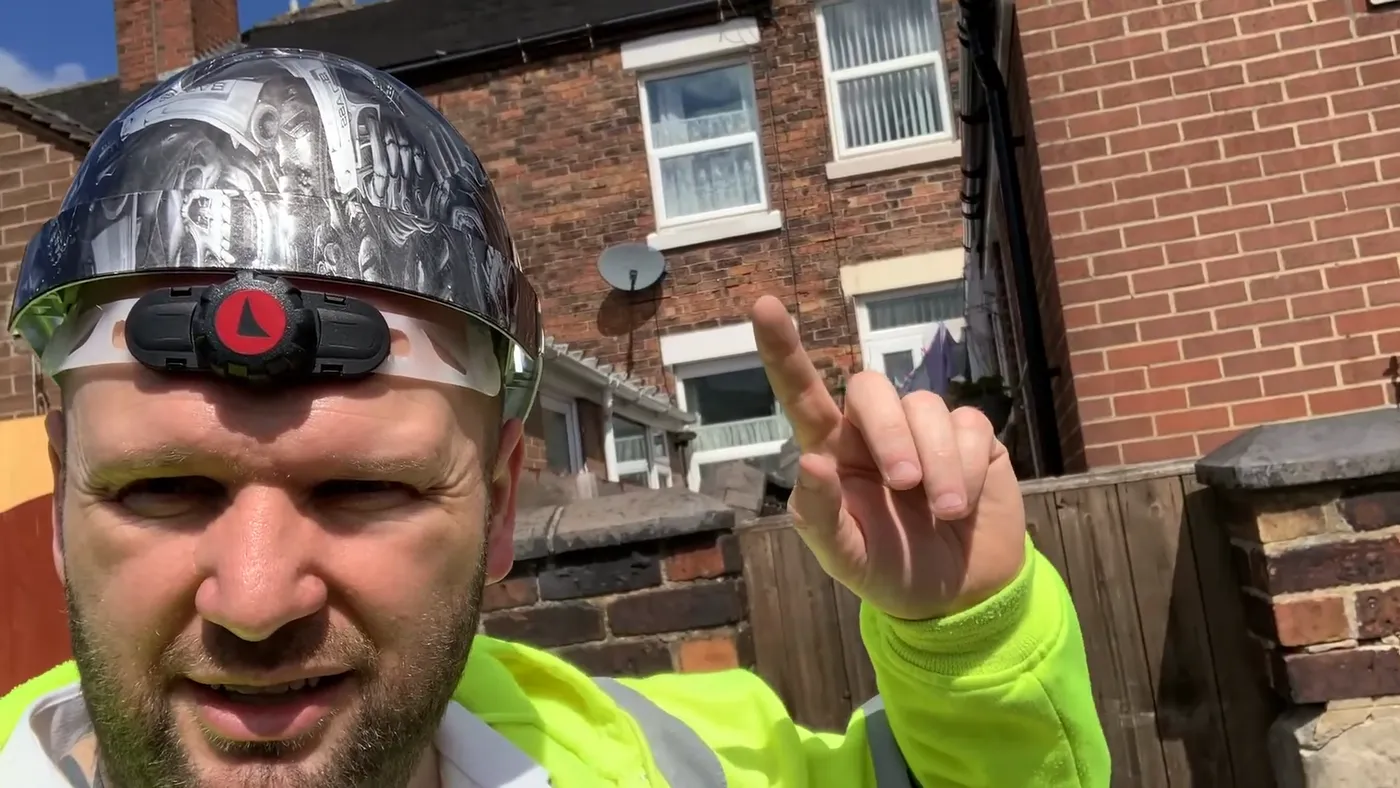
John walks the outside of the Fenton property and its neighbour in the first film, which is the quickest way to see what a whole elevation looks like when the ties have gone.

John standing outside the rear of the affected terraced property, pointing up towards the elevation, with the adjoining house alongside.
John outside the affected house and its neighbour. On a terrace, the wall is rarely only your problem.
CHAPTER06

How to fix wall tie failure

A structural engineer will be able to determine which method is needed to properly repair a wall with failed wall ties.

Sometimes remedial works such as brick stitching are possible. In more serious cases, the wall may have to be rebuilt.

Where the wall can be saved, the failed ties are cut out or isolated and replacement ties are installed. Modern wall ties are stainless steel, so the same thing does not happen again in another fifty years.

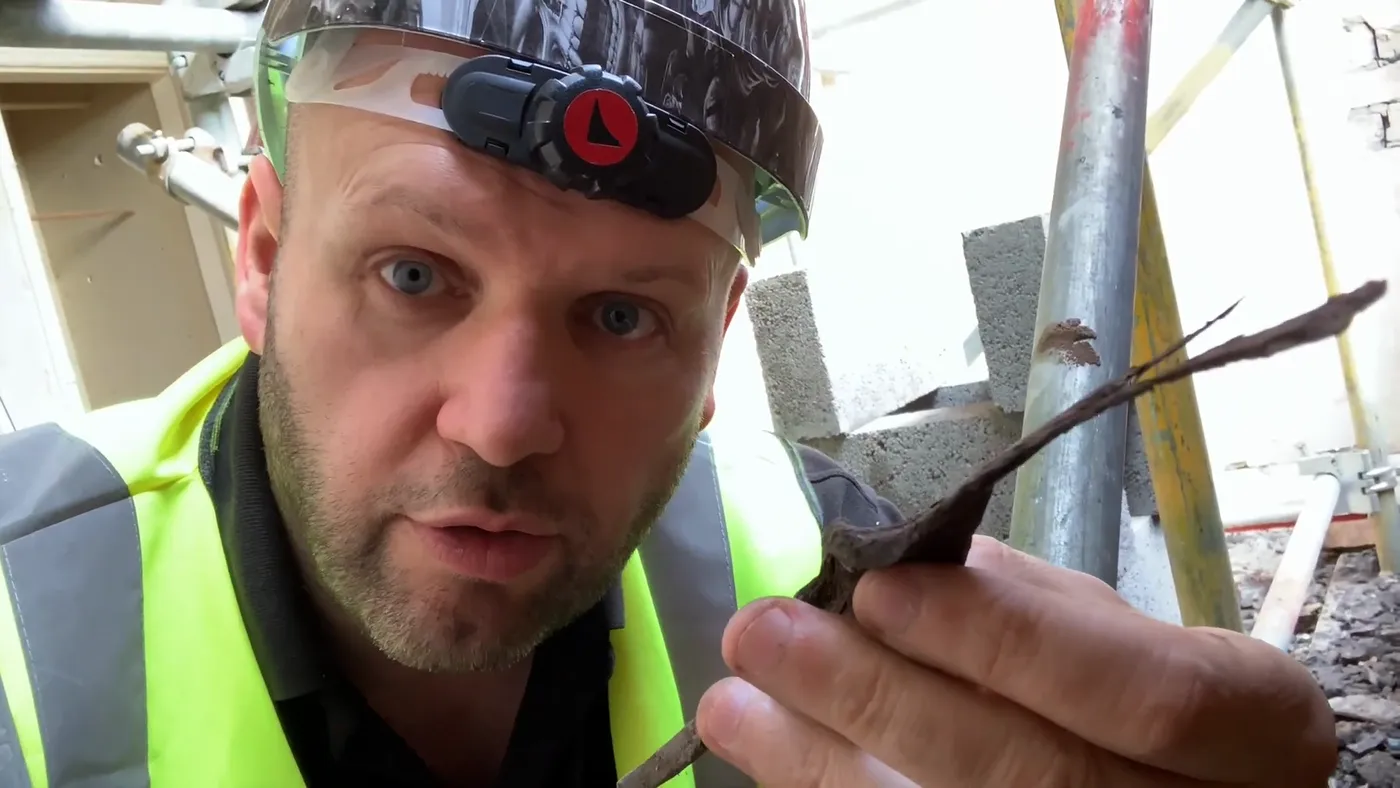
John holding up a heavily corroded steel wall tie taken out of the cavity, beside a modern replacement.
The old tie, out. Its replacement is stainless, which is the part that stops this repeating.

Found this on a property you own or manage?

We do the work.

Homes, rental property and commercial premises: priced properly, run by one project manager, and logged and photographed on The HYPE System.

↳ 03 On camera
03Guide · On Camera
03 / 04

On camera

Watch it on a real job.

John walks the Fenton property where the ties had gone far enough to take the rear wall down, and shows what came out of the cavity. Every photograph on this page is a frame from this film or its first part.

↳ 04 Start your build
12Tell me about your build · Resonance
12 / 12

For the right build only

Build it right.
Build it HYPE.

We take on substantial building work across Stoke-on-Trent and the Midlands: extensions, conversions, full refurbishments, commercial works and repairs after fire, flood or damage. Properly scoped projects, not odd jobs or reactive maintenance.

We're VAT registered, so on smaller jobs a non-VAT builder will always undercut us. That's just the maths. Our work pays off where doing it properly matters more than the cheapest quote.

If that sounds like your project, tell us what you've got. We'll tell you straight whether we're right for it, and if we're not, we'll say so. Either way, we wish you all the best x.

↳ Speak to the team+44 1782 930 043Mon–Fri · 9am–5pm · Sat–Sun · Closed
End of drawing set