Skip to content
01Guide · Insulated Plasterboard
01 / 04
Guides · Insulation

How to fit and secure insulated plasterboard.

Insulated plasterboard has a foil face that dot and dab will not hold. It needs panel adhesive and a mechanical fixing. Here are the fixings we use, why, and how the boards go on a solid brick wall.

↳ 02 The guide
02Article · The Long Read
02 / 04

The brief

Last reviewed · 13 August 2026

Internal wall insulation is one of the biggest single moves a landlord or owner-occupier can make to upgrade an older property's EPC rating. Insulated plasterboard is the standard product. The installation method matters: get it wrong and you trap moisture inside the wall.

U-0.18Achievable U-value
50mm+Insulation thickness
PIRInsulation material
PanelPrimary adhesive type
CHAPTER01

Fitting and securing insulated plasterboard to a wall

How do you fit and secure insulated plasterboard? That's a question quite a few of our YouTube viewers have asked.

In the video further down this page, the BIG Man describes the method we use to attach the plasterboard to the wall and how we secure it using panel adhesive and mechanical fixings. He shows the exact products involved, and every photograph on this page is a frame from that film.

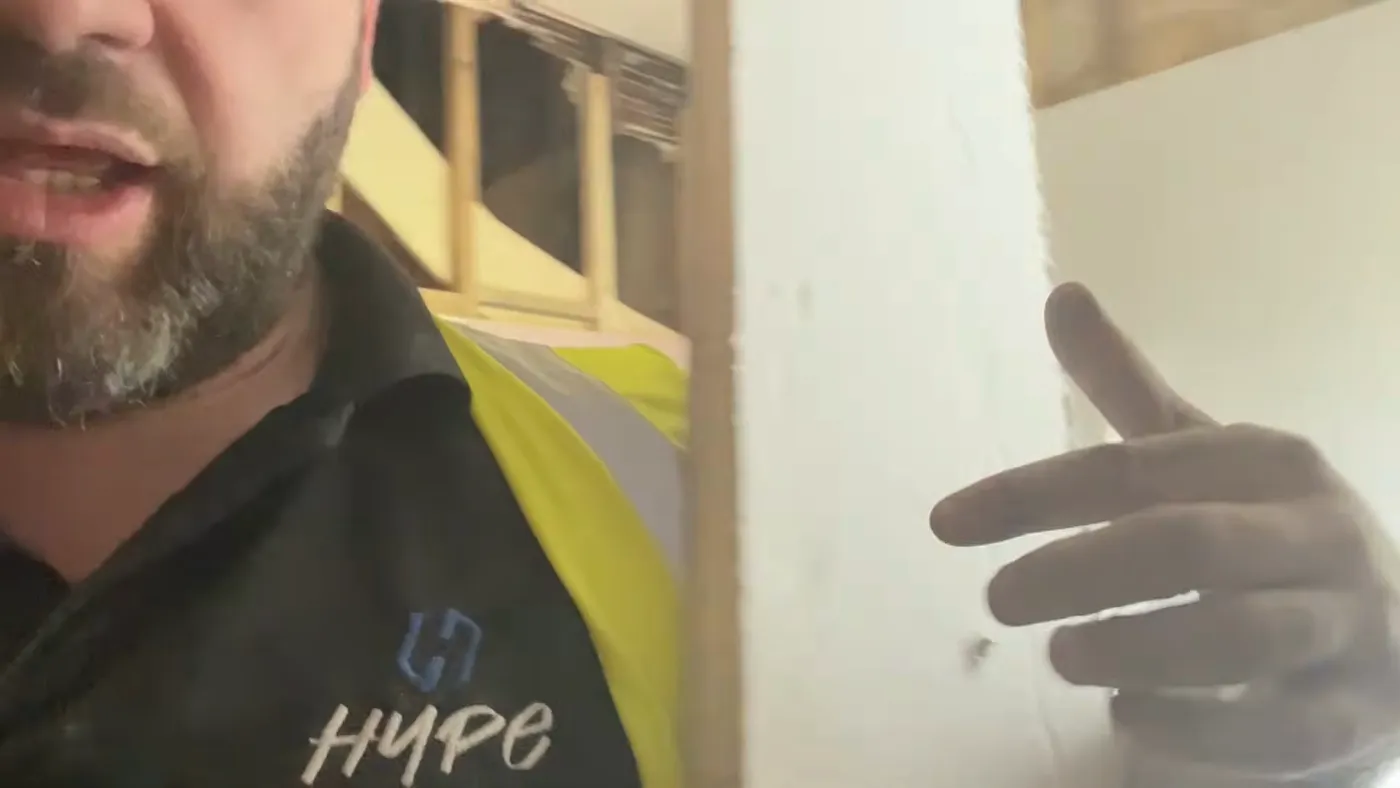
The foil-faced edge of an insulated plasterboard sheet, showing the shiny coating that ordinary adhesive will not grip.
That shiny face is the whole problem. Ordinary adhesive does not key to it.
CHAPTER02

Why dot and dab will not hold insulated plasterboard

Insulated plasterboard is different to normal plasterboard. Not just because it has a layer of insulation, but because it has a different, shiny coating.

This means the usual dot and dab method of securing plasterboard to a wall is insufficient.

A mechanical fixing is required, in addition to adhesive. Adhesive alone will hold the board for a while and then let it go, and on a heavy insulated board that is not a snagging item, it is a sheet of insulation coming off a wall.

CHAPTER03

The best fixings for insulated plasterboard

Two things hold the board on, and both are needed.

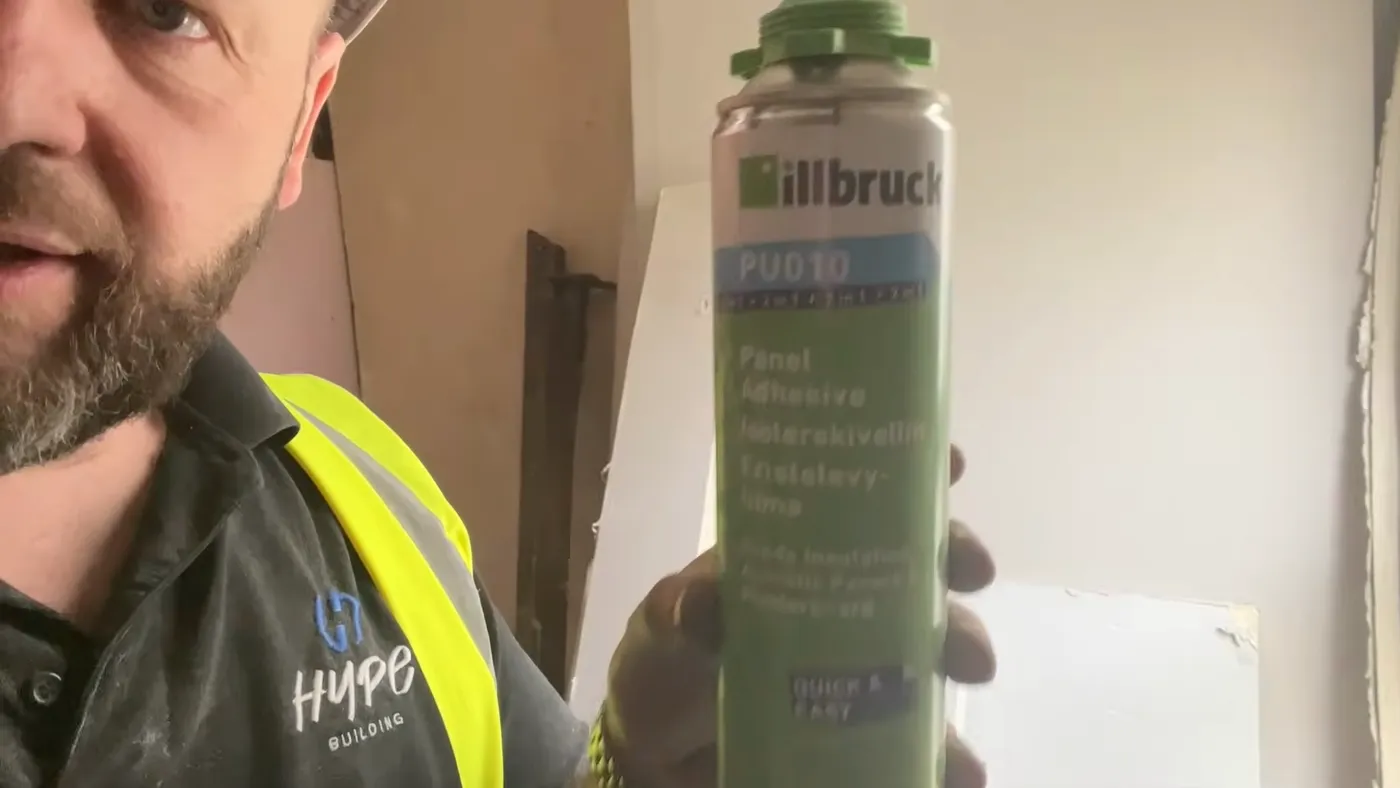
The adhesive. Attach the plasterboard to the external wall using Illbruck PU010 panel adhesive. Any form of panel adhesive can be used here, we prefer to use Illbruck. It is a fast curing polyurethane, ideal for rapid installation of plasterboard, insulation or acoustic panels.

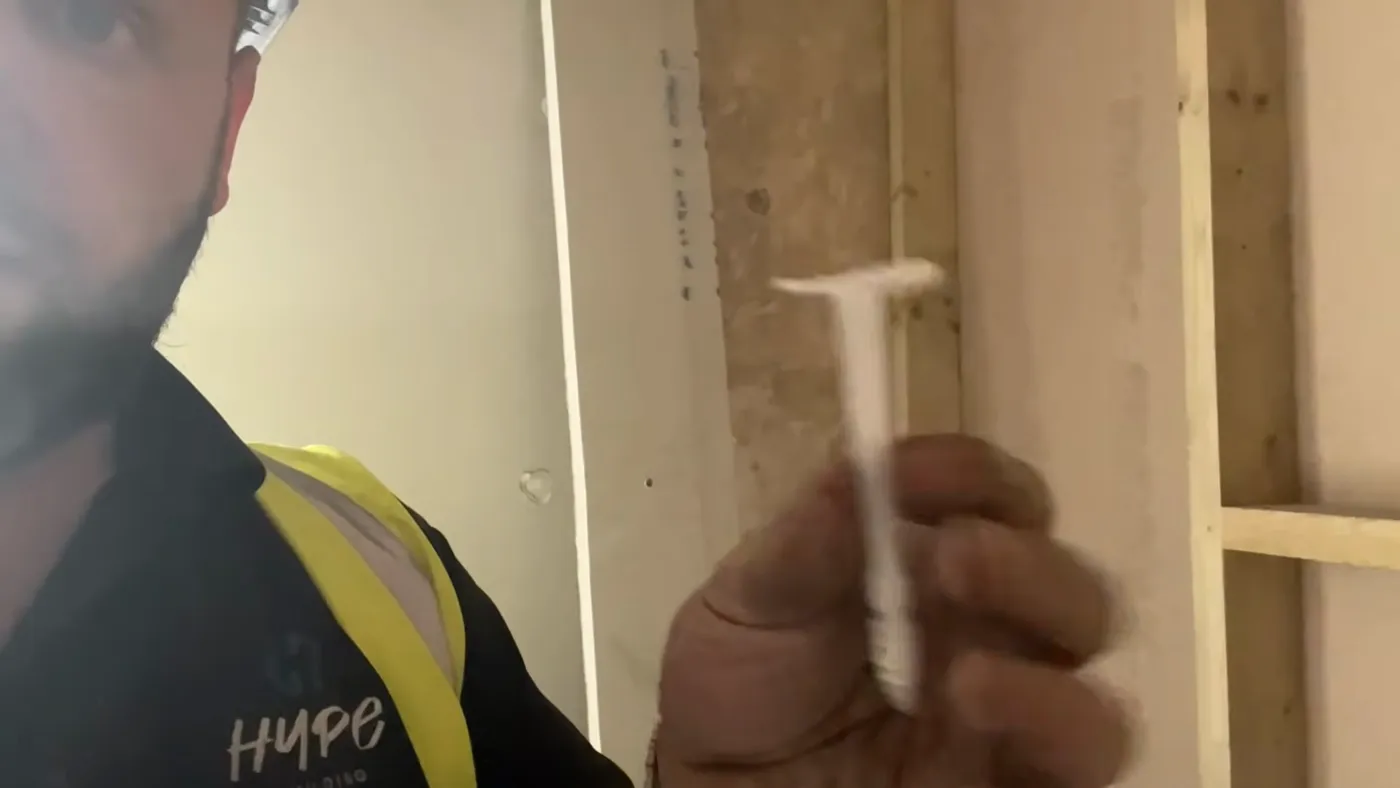
The mechanical fixing. Use a mechanical insulation fixing, which looks a bit like a golf tee, to prevent the plasterboard from slipping. We use plastic insulation fixings from TIMCO.

Worth being clear about the terminology, because people search for the wrong thing: these are insulation fixings, not screws. A screw pulls a fixing tight against a surface. An insulation fixing has a wide flat head that spreads the load across the soft board face without crushing it, and a ribbed shank that grips the brickwork the way a wall plug does.

Fixings come in different lengths depending on the thickness of your insulated plasterboard. That is the only sizing decision that really matters: the fixing has to pass through the board and the insulation and still get a proper bite into the masonry behind.


A white plastic insulation fixing held in the hand, with a wide flat head and a ribbed shank.
The fixing. Wide head to spread the load across the board, ribbed shank to grip the brick.
CHAPTER04

How to fix insulated plasterboard to a brick wall

Run the panel adhesive onto the back of the board and offer it up to the wall.

Drill through the plasterboard and into the brickwork to the depth the fixing needs. The diameter of the hole depends on the diameter of the fixing.

Tap the fixing into place. The teeth grip the brickwork in the same way a wall plug would.

The result should sit flush to the wall and not move. If a board rocks or the head of a fixing sits proud, that is worth sorting before anything gets skimmed, because neither problem gets easier once it is buried.

John holding a can of Illbruck PU010 panel adhesive on site.
The adhesive John uses. Any panel adhesive works, this is the one we buy.
CHAPTER05

Key moments from the video

0:33 · John describes the condensation issues that can arise from a solid brick wall without a cavity. Insulated plasterboard can help combat this.

2:40 · Insulated plasterboard has a shiny coating, which regular adhesive will not stick to. Hence, we use panel adhesive as well as a mechanical fixing.

3:32 · We use Illbruck PU010 panel adhesive. It's a fast curing polyurethane, ideal for rapid installation of plasterboard, insulation or acoustic panels.

4:13 · We use TIMCO plastic insulation fixings in addition to the panel adhesive, to ensure the plasterboards are properly secured to the wall.

5:18 · Drill through the plasterboard into the brickwork. The diameter of the hole will depend on the diameter of the fixing.

6:20 · John shows an insulated plasterboard that has been securely fixed using the method he describes. It is flush to the wall and ultra secure.

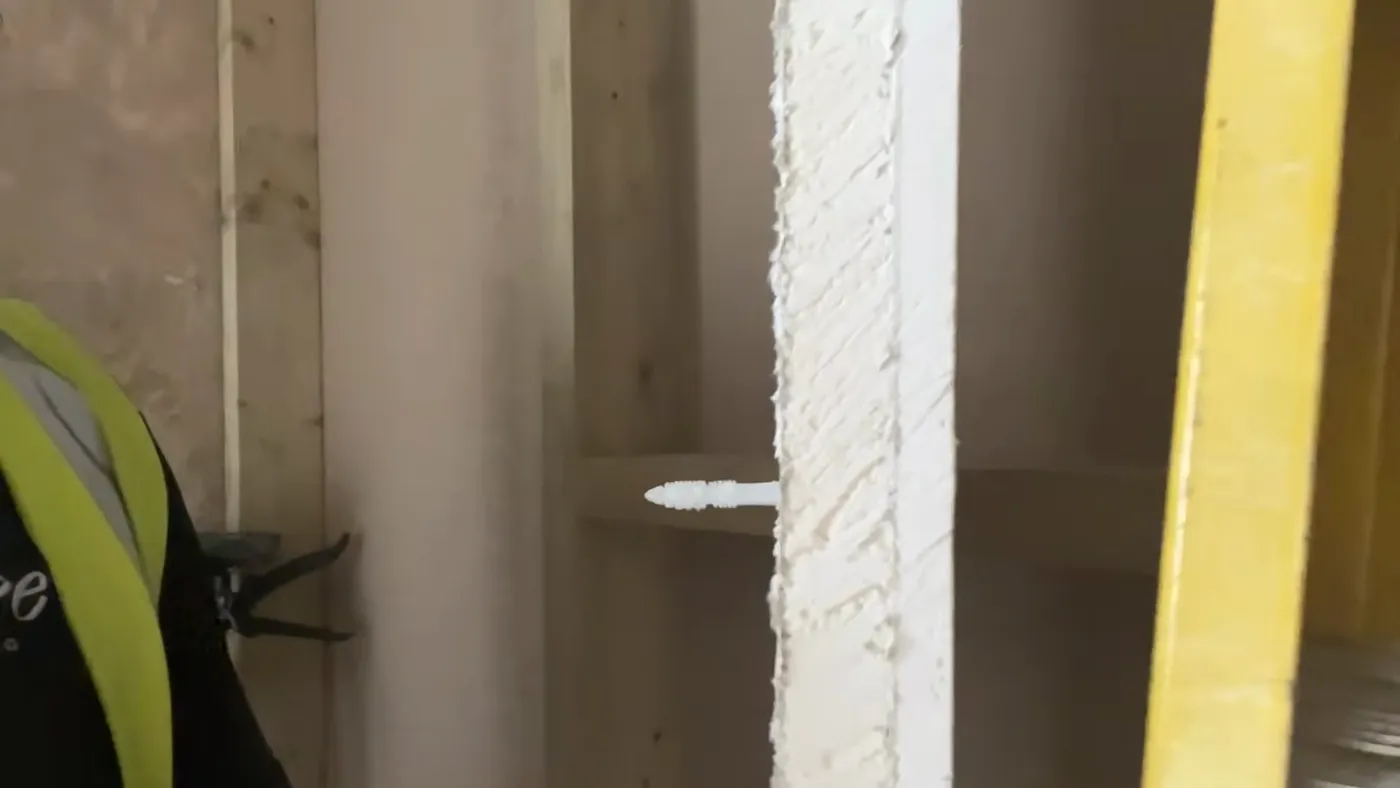
An insulation fixing driven through an insulated plasterboard sheet into the wall behind, beside a bead of panel adhesive.
Adhesive and fixing together. Neither one on its own.

Thanks for the video, it helped me a lot.

CHAPTER06

Why should landlords use insulated plasterboard?

As the landlord of a HMO, you'll be paying the energy bills. Therefore, it's wise to insulate the property as well as possible from the outset to reduce heat loss.

Insulated plasterboard is great for reducing heat loss, especially in older properties. It's also great for protecting against damp issues such as condensation.

It can also improve your EPC rating. And considering the new EPC regulations due to take effect in 2028, it can prove its worth.

CHAPTER07

Advantages of insulated plasterboard

The main advantage of insulated plasterboard is that it improves the U-value of the wall, which in turn can improve the EPC rating. A U-value measures how fast heat escapes through a structure, so improving it means bringing the number down.

A happy by-product of better thermal performance is a reduction in energy bills. Not having to turn the heating up as high adds up.

Newly fitted boards should also deal with condensation, particularly where they have a built-in vapour control layer. That is especially useful on a solid brick wall, meaning one without a cavity, which is most of the older stock around Stoke-on-Trent.

John covers the benefits in a second film, shot on a listed building conversion where keeping the Building Officer, the HMO Officer and the Heritage Officer happy was no mean feat.

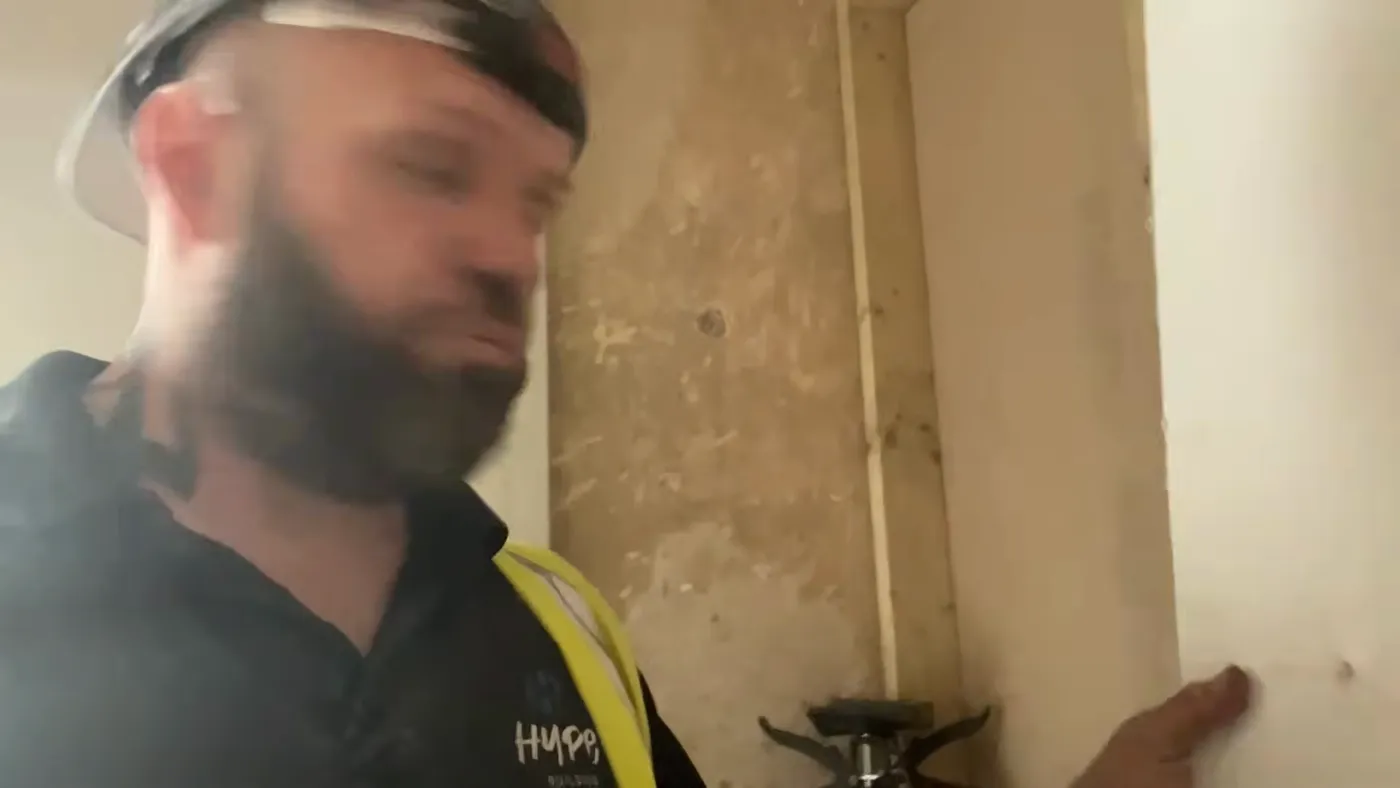
A fitted insulated plasterboard sheet sitting flush against the wall, with John pointing to the finished edge.
Flush, solid, and ready to skim. That is what a board fixed both ways looks like.

Found this on a property you own or manage?

We do the work.

Homes, rental property and commercial premises: priced properly, run by one project manager, and logged and photographed on The HYPE System.

↳ 03 On camera
03Guide · On Camera
03 / 04

On camera

Watch it on a real job.

John fits insulated board to a solid brick wall, and shows the adhesive, the fixings and what a properly secured board looks like. Every photograph on this page is a frame from this film.

↳ 04 Start your build
12Tell me about your build · Resonance
12 / 12

For the right build only

Build it right.
Build it HYPE.

We take on substantial building work across Stoke-on-Trent and the Midlands: extensions, conversions, full refurbishments, commercial works and repairs after fire, flood or damage. Properly scoped projects, not odd jobs or reactive maintenance.

We're VAT registered, so on smaller jobs a non-VAT builder will always undercut us. That's just the maths. Our work pays off where doing it properly matters more than the cheapest quote.

If that sounds like your project, tell us what you've got. We'll tell you straight whether we're right for it, and if we're not, we'll say so. Either way, we wish you all the best x.

↳ Speak to the team+44 1782 930 043Mon–Fri · 9am–5pm · Sat–Sun · Closed
End of drawing set