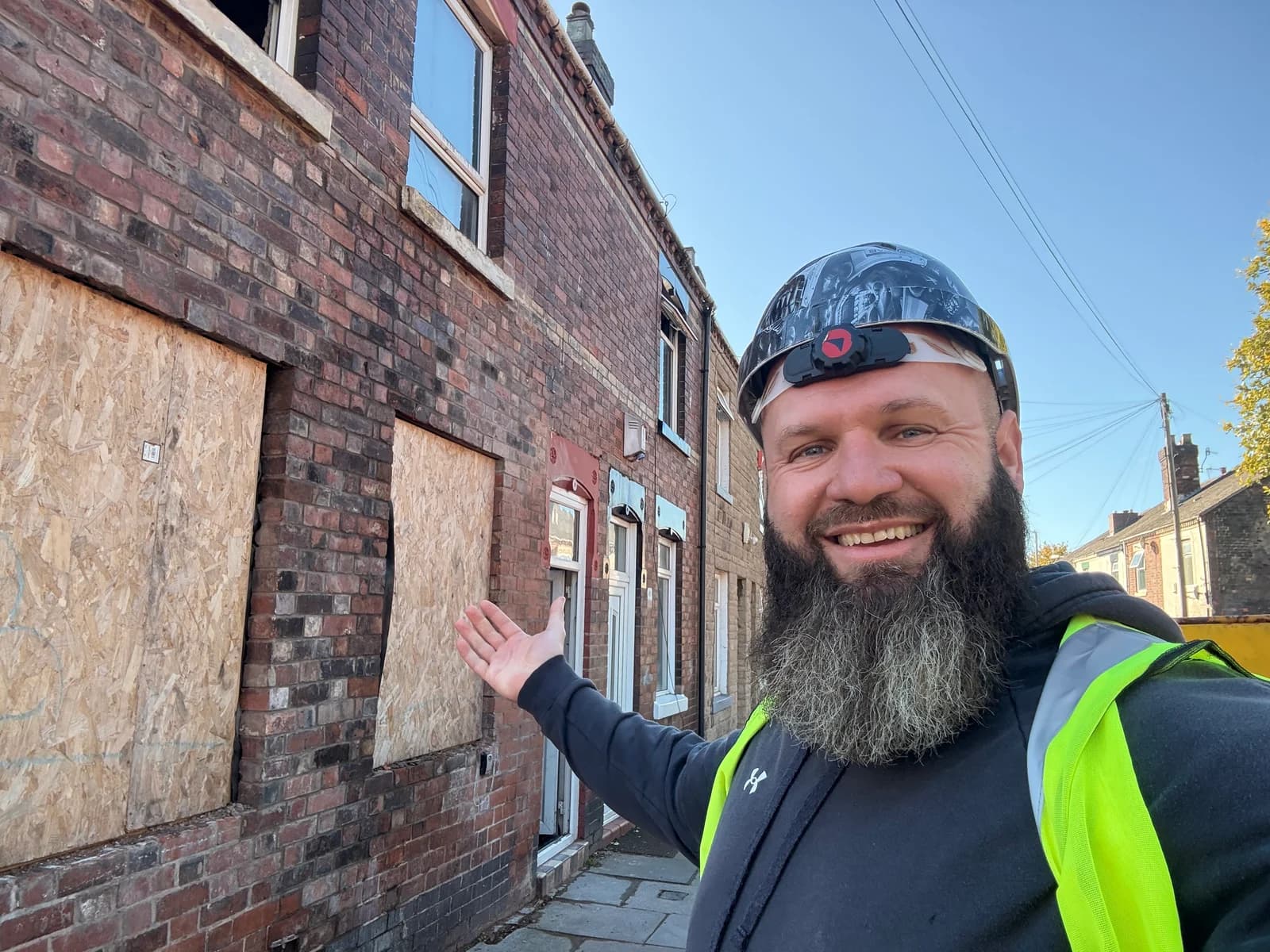
Plenty of builders will hand you a fixed price. It looks reassuring on paper. But a building that hasn't been opened up yet is a closed box: nobody, us included, knows exactly what's behind the plaster, under the floor, or holding the roof up. A price that pretends otherwise isn't certainty. It's a guess dressed as a promise, and one of you is going to pay for the difference.
ScopePriced line by line before we start
ContingencyAdvised on every job, sized to the building
Rip-outThe point where the building tells the truth
In writingEvery extra priced and agreed before it lands
01 · Chapter
Why the fixed price is a fiction
Construction prices the unknown. A tired terrace, an empty pub, a house that's been stood a hundred years: until it's opened up, its real condition is hidden. A builder who gives you a fixed number on day one has either priced in a fat cushion you'll pay whether the problems appear or not, or priced thin to win the job and will claw it back later, the hard way. Neither is honest. The industry-standard contracts, JCT among them, are built the way they are for exactly this reason: an agreed scope and price, with a proper process for anything the building reveals.
02 · Chapter
What we do instead
We price your job line by line, so you can see exactly what you're buying before a brick moves. Scope and price agreed in writing. Alongside it, we advise a contingency: an amount held back for what the building might be hiding, sized to its age and condition. That's not us hedging. That's us telling you the truth about old buildings before you commit, not after.
03 · Chapter
The rip-out: when the building tells the truth
Early in most refurbishments comes the strip-out, back to bare brick. This is the moment of truth on any job. Cracks that were papered over. Foundations that need attention. The things no survey can fully see. Whatever the building has been hiding, this is where it shows itself, on camera, in daylight. It's also why we film it: you see what we see.
04 · Chapter
How extras actually work
If the rip-out reveals something outside the agreed scope, it gets flagged, priced, and agreed with you in writing before any cost lands. Logged on The HYPE System, so there's a record. No six-figure surprise in month four, no quiet additions on the final invoice. You stay in control of every decision that moves the number, because every one of them crosses your desk first.
05 · Chapter
When certainty arrives
Here's the honest shape of a build: uncertainty is at its highest before the strip-out, and falls away fast once the building is open and its condition is known. Past that point, your contingency is usually safe and the programme firms up. We tell you when you're through it. That's a real promise we can keep, unlike a fixed number invented before anyone lifted a floorboard.
06 · Chapter
What you're actually paying for
Here's the test: imagine project-managing your own build. Monday morning, the plasterer's gone quiet and won't answer his phone. You spend the day trying to get another one programmed in. The electrician booked for Tuesday turns up, can't start because the walls aren't ready, and invoices you for his time anyway. Now the programme has slipped, the costs are moving, and every trade behind him is a fresh phone call. That, right there, is the job. When you hire HYPE, that Monday is ours: the sequencing, the chasing, the trade who's gone quiet, the problem at 7am. You get the update that says it's handled. Peace of mind is not a line on the estimate, but it's most of what the estimate buys.
07 · Chapter
The question to ask any builder
Ask them what happens when the strip-out finds something. If the answer is a blank look, a shrug, or 'don't worry, it's all in the price', walk away. If the answer is a process: priced, agreed in writing, before the work happens, you've found a builder who respects your money. That's the standard we hold ourselves to, on every job, on camera.